What Christmas commemorates is fundamental to the Christian faith. However, it’s not just for Christians. It affects everyone, and understanding what it means can radically change your life.
The story starts when God created everything. The Bible says He made land, plants, trees, the sun and moon, animals, and humans (Genesis 1). He also made angels, heavenly beings that do His bidding in the unseen world of the spirit (Colossians 1:15–16). Everything was perfect. No one sinned or did evil.
Unfortunately, one of the angels God created rebelled against God because he wanted to be God himself (Isaiah 14:12–14 NKJV). He became the Devil (also known as Satan) and got busy trying to ruin God’s plan. He tricked the first humans God created, Adam and Eve, into allowing sin into the world, which is known as the Fall. Humanity and even creation itself changed. There was a division between God and humanity, as God is perfect and humans were fallen. God, however, already knew that this would happen. Although He punished Adam and Eve for their disobedience, He said that a redeemer or savior would one day come to undo the consequences of their actions (Genesis 3).
Thousands of years later, God spoke to a man named Abraham and called him and his descendants to worship only Him. It was a radical notion at a time when people worshipped a range of animate and inanimate objects. But Abraham remained true to the one true God. His descendants, the Israelites, eventually settled in the land we now call Israel. (See Genesis 11:27–25:11.)
The Israelites kept records of God’s messages given to prophets, people who were filled with God’s Spirit and wrote down what God told them. These messages included “clues” about the coming Savior. One prophet foretold that the Savior would be born in Bethlehem, a small town in Israel (Micah 5:2). Another said His mother would be a virgin (Isaiah 7:14), and that He would preach good news to the poor, free the captives, and heal the sick (Isaiah 61:1).
Around 4 BC, God put His plan into action. He sent an angel to a young woman named Mary. She was a virgin, but she was engaged to be married to a man named Joseph. The angel told Mary that she would become pregnant and have a son. What’s more, her child, Jesus, would be God’s Son and would save the people from their sins. Mary’s fiancé, Joseph, was upset when he found out Mary was pregnant, but God sent an angel to him to tell him the baby was conceived by God. Joseph married Mary as the angel had commanded him. (See Luke 1:26–35, Matthew 1:18–25.)
Joseph and Mary lived in a town called Nazareth, in northern Israel, but his family was originally from Bethlehem. When the emperor ordered everyone back to their hometowns for a census, Joseph traveled back to Bethlehem with Mary shortly before Jesus was to be born. Unfortunately, they could not find a place to stay. Popular culture typically depicts them being turned away from inns before finding shelter in a remote stable, but Bethlehem was too small to have any inns. Thus, it’s most likely the stable Jesus was born in was a small barn attached to a relative’s home.
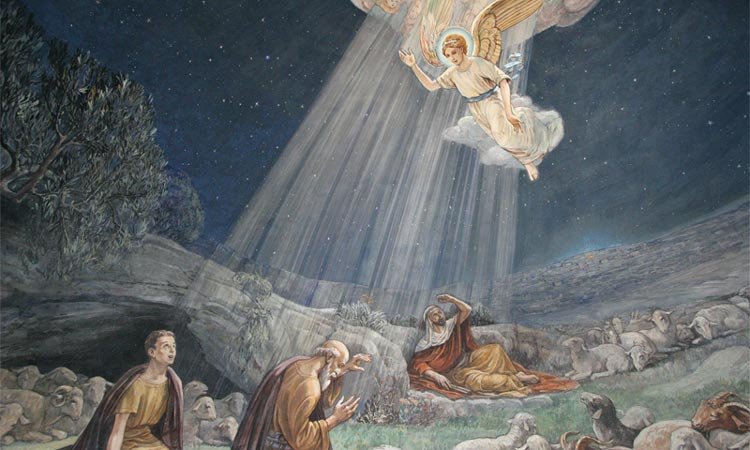
The Bible then tells us that, right after Jesus was born, an angel appeared to a group of shepherds watching sheep on a nearby hillside. The angel told them not to be afraid, and told them where and how to find Jesus. Once they found Him, they worshipped Him and then told the entire town about what they had heard and seen that night (Luke 2:1–20).
Another group of men, this time from outside Israel, also paid Jesus a visit after His birth. The Bible tells us that they saw an unusual star in the sky when Jesus was born. Like many people of that time period, they believed that the out-of-the-ordinary “sign in the heavens” meant something; in this instance, the birth of a new king of Israel. Thus, they started traveling to see him. At some point in the journey, or perhaps even beforehand, they realized that they weren’t just going to see royalty. The Bible tells us that when they saw Jesus, they not only gave Him gifts but also worshipped Him (Matthew 2:1–12).
There’s a lot about the Christmas story that can seem fantastical. Angels, an unusual star, and a virgin having a baby are certainly not common occurrences. But historical evidence outside the Bible tells us that Jesus was a real person who lived in the first century. What’s more, His mission makes perfect sense when we understand the original context.
God is just, holy, and perfect, but also merciful. The Bible says He is love itself (1 John 4:8). He can’t accept sin in His presence, but wanted to close the gap between us and Him. He doesn’t want us to suffer punishment for our sins even though we deserve to do so. That’s why Jesus came to earth. Jesus lived a perfect life, and His death paid the price for our sins. That’s why billions of people the world over, on December 25, celebrate the fact that “to us a child is born… And his name shall be called Wonderful Counselor, Mighty God, Everlasting Father, Prince of Peace” (Isaiah 9:6).