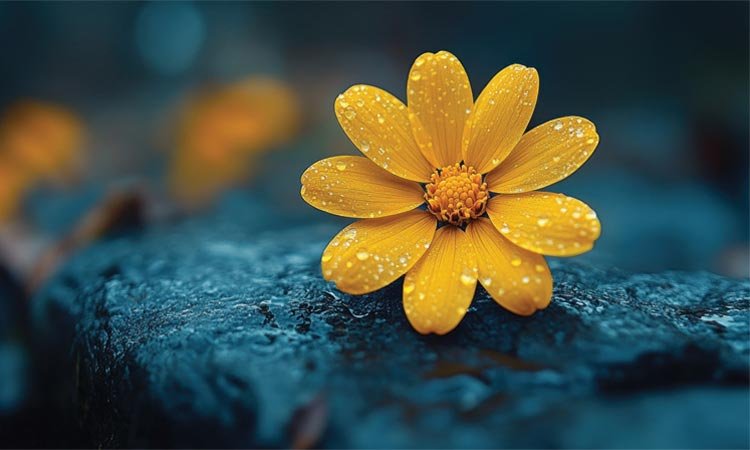
Throughout Scripture, dew is a sign of blessing, for in a harsh, arid climate, no plant life would survive without it.
For thousands of years, man has devised ways to harvest the morning dew. In Israel, archaeologists found low circular walls that were built around plants to collect moisture from condensation. In Egypt and South America’s Atacama Desert, piles of stones were arranged so that condensation could trickle down the inside walls, where it was collected.
Today, non-profit organizations are developing methods to collect dew in the hope of harvesting precious water. For example, in Chungungo, Chile, where annual precipitation is less than six centimeters, the village has been able to collect 15,000 liters of water a year for the past ten years using such methods.
A UK engineering firm and the charity WaterAid held a competition aimed at finding new technologies to help people gain access to clean water in areas where it is scarce. The contest was won by Israeli architects Cory and Malka, who designed a dew-harvesting contraption. They were inspired by seeing drops of water on desert spiders’ webs. Their design consists of an inverted pyramid of sheet material, which collects dew and channels it into a filtration unit.
Chinese scientists are studying spider webs to understand why they are effective at collecting water. They found that the spider webs change their structure when they encounter water, which enables them to better direct the water drops.
Like a spider web, we can channel the “water of life” where it is most needed. When all around us is dry and barren, that’s our time to flow. That’s when the dew is most appreciated. Many people in our world today are fainting for thirst—not for water, but for God’s Word and truth. We can be the vessels of that water to slake others’ thirst.
Just as the dew brings water out of the air, so we make faith in God come to life. We are to make the invisible things of God’s love clearly manifested through our actions. Jesus said, “By this all people will know that you are my disciples, if you have love one for another” (John 13:35). Let us be known by that love that makes the invisible visible, and the abstract so very real. Let us be the water of life, a very present help in time of trouble for those who need it most.